
- Treatments
- Total & Partial Knee Replacement
- Hip Replacement
- Shoulder Replacement
- Robotic-Assisted Joint Replacement
- Revision Joint Replacement Surgeries
- Spine Surgeries
- Complex Trauma & Fracture Management
- Arthroscopic & Minimally Invasive Procedures
- Peri-Prosthetic Infection Management
- Pre & Postoperative Rehabilitation Guidance
- Orthopaedic Consultation & Diagnostics
Spine Surgeries
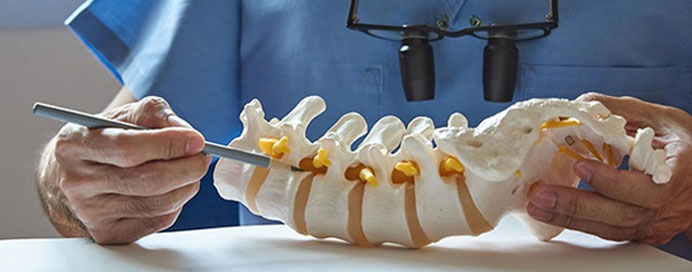
Spine surgery is a broad field aimed at treating conditions affecting the spinal column, nerves, and surrounding structures. With advancements in modern techniques, including minimally invasive and robotic-assisted surgeries, patients can experience precise treatment, faster recovery, and improved long-term outcomes.
1- Microscopic Spine Surgery
Microscopic spine surgery uses high-powered microscopes to perform delicate procedures on the spine through small incisions. This approach minimizes damage to surrounding tissues, reduces pain, and speeds up recovery.
- Less tissue damage and scarring.
- Shorter hospital stay and recovery.
- Ideal for disc herniation and nerve compression.
2- MISS (Minimally Invasive Spine Surgery)
MISS techniques allow surgeons to treat spinal conditions through small incisions using specialized instruments. It reduces blood loss, lowers infection risk, and preserves muscle and bone structure.
- Smaller incisions and faster healing.
- Reduced post-operative pain.
- Suitable for spinal stenosis, degenerative discs, and fractures.
3- Spinal Fusion Surgery
Spinal fusion joins two or more vertebrae to stabilize the spine, often used for instability caused by degenerative disc disease, fractures, or deformities.
- Provides long-term spinal stability.
- Reduces pain from unstable vertebrae.
- Can prevent progression of spinal deformities.
4- Disc Replacement Surgery
Artificial disc replacement replaces a damaged disc with a prosthetic one, maintaining motion at the affected segment and relieving nerve compression.
- Preserves spinal mobility.
- Reduces pain from degenerated discs.
- Shorter recovery than fusion in many cases.
5- Spine Deformity Correction
Surgery for spinal deformities, such as scoliosis or kyphosis, aims to correct abnormal curvature and restore proper spinal alignment.
- Improves posture and spinal balance.
- Relieves pain and prevents progression.
- Uses advanced techniques and implants for precision.
6- Trauma & Fracture Management
Spinal trauma surgeries stabilize fractured vertebrae and decompress nerves, restoring function and preventing further injury.
- Immediate stabilization of spine after trauma.
- Reduces risk of paralysis or neurological deficits.
- Can involve minimally invasive or open techniques depending on injury.
7- Revision Spine Surgery
Revision spine surgery is performed to correct issues from a previous spinal procedure, such as persistent pain, implant failure, or deformity recurrence.
- Addresses complications from prior surgery.
- Can restore stability and mobility.
- Requires advanced planning and specialized implants.