
- Treatments
- Total & Partial Knee Replacement
- Hip Replacement
- Shoulder Replacement
- Robotic-Assisted Joint Replacement
- Revision Joint Replacement Surgeries
- Spine Surgeries
- Complex Trauma & Fracture Management
- Arthroscopic & Minimally Invasive Procedures
- Peri-Prosthetic Infection Management
- Pre & Postoperative Rehabilitation Guidance
- Orthopaedic Consultation & Diagnostics
Complex Trauma & Fracture Management
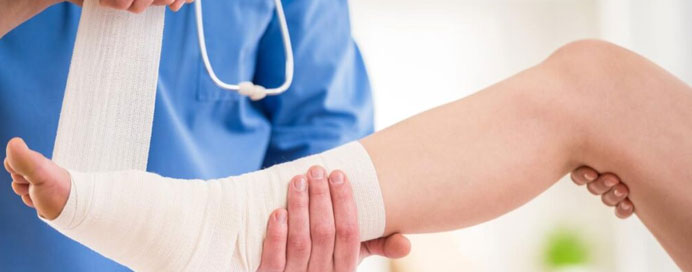
Complex trauma and fracture management involves the treatment of severe injuries to bones and joints caused by accidents, falls, or high-impact trauma. These injuries may involve multiple bones, joints, or soft tissues, and often require specialized surgical techniques to restore anatomy and function. Modern fracture management focuses on precise fixation, early mobilization, and comprehensive rehabilitation to ensure optimal recovery and prevent long-term complications.
Key Aspects of Complex Trauma Management
- Accurate Assessment: Detailed evaluation using X-rays, CT scans, or MRI to understand fracture pattern and associated injuries.
- Surgical Intervention: Internal fixation with plates, screws, nails, or external fixation devices for complex fractures.
- Minimally Invasive Techniques: When possible, to reduce tissue damage and speed up recovery.
- Soft Tissue Care: Management of ligaments, tendons, and surrounding muscles for full functional restoration.
- Rehabilitation: Early physiotherapy to restore movement, strength, and prevent stiffness.
Benefits
- Restores bone alignment and joint function.
- Reduces risk of malunion, nonunion, or deformity.
- Minimizes long-term disability.
- Shortens recovery time with modern surgical techniques.
- Enables safe return to daily activities and work.